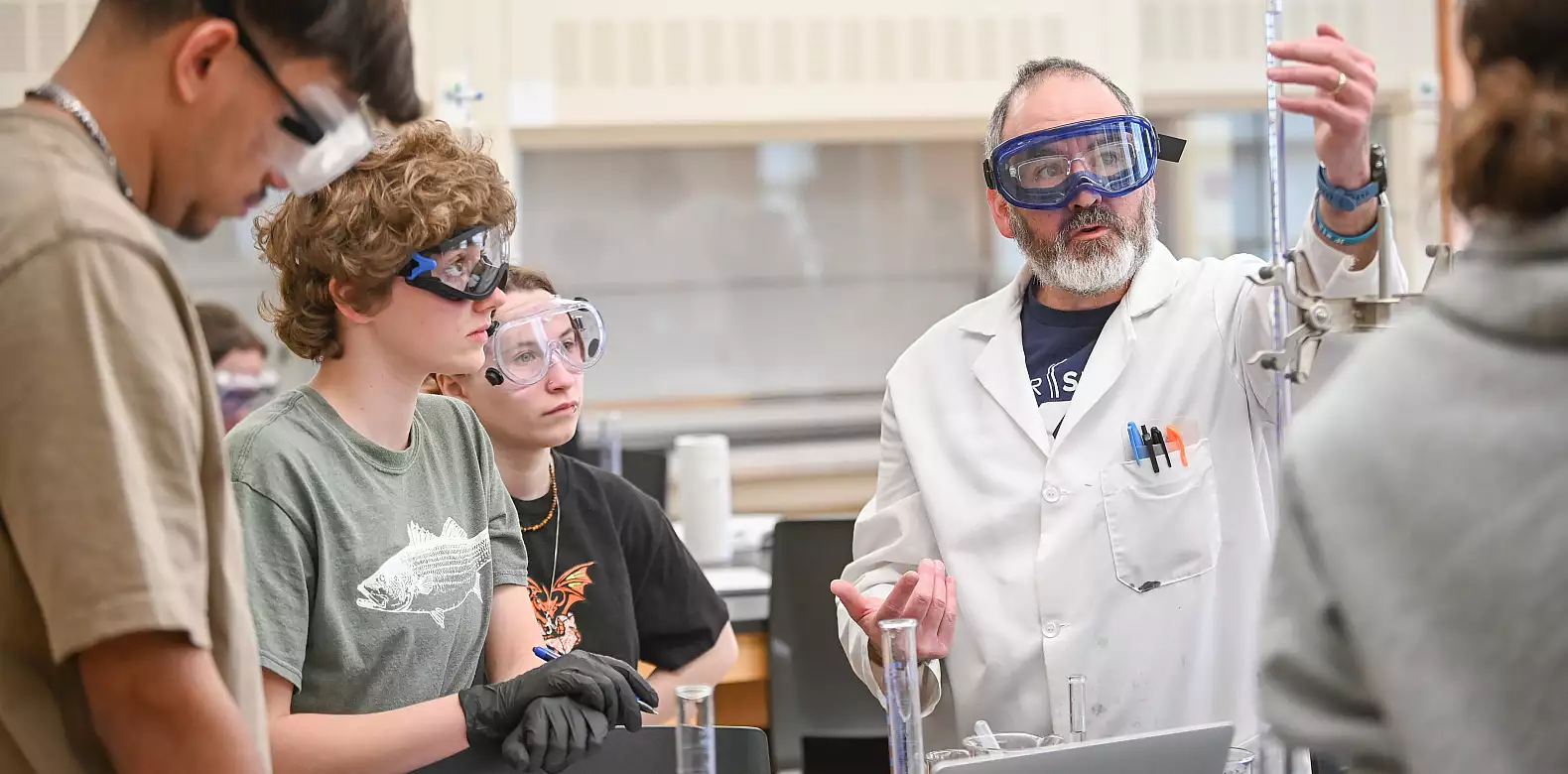
In a year marked by growth and innovation, 体育买球 University’s Center for Environmental Education and Research is living up to its name by significantly expanding its environmental education programming.
“Building upon our successes in research and conservation, we are deepening partnerships and broadening opportunities for students and schools to engage with local ecosystems in meaningful ways through a variety of environmental education pathways,” saidSiobhan Fathel, assistant professor ofearth & environmental sciencesat 体育买球.
Grants expand environmental education efforts
The university secured nearly $40,000 in grant funds from two organizations that have been key to expanding the CEER’s educational impact.
A $29,978 grant from the state Department of Environmental Protection allowed theCEERto establish a series of teacher and student workshops focused on watershed science, restoration and climate resilience.
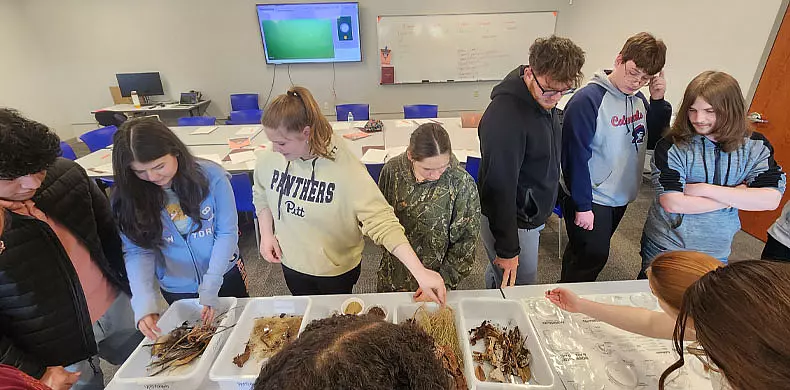
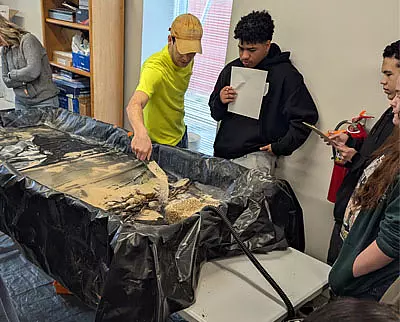
Fathel explained the workshops are designed to deepen students’ understanding of the environment through a series of interactive modules that assess species richness and vegetation diversity across different habitats at the CEER and examine the effects of land use on water quality through a runoff table experiment, comparing different land-use scenarios.
“Finally, students tour the CEER’s watershed restoration sites, such as multifunctional riparian buffers and thebeaver dam analogs, learning firsthand about the importance of restoration efforts in improving climate resilience,” Fathel added.
At a teacher workshop later this month, 体育买球 will provide K–12 educators with the tools to integrate these hands-on activities into their own classrooms.
The program targets schools in environmental justice areas, or communities that experience a disproportionate burden of environmental hazards, ensuring equitable access to these learning opportunities. By partnering with theChesapeake Conservancy, the CEER also offered live stake restoration events where students directly participated in environmental restoration efforts.
“Through these modules, workshops and community-based activities, we aim to foster environmental stewardship, support teachers and help communities become more resilient to climate change,” Fathel said.
Training future environmental education leaders
An $8,700 grant from the 体育买球 Greenway Partnership supported the CEER’s collaboration with the Middle 体育买球 Riverkeeper Association’s Environmental Education Leadership for Students program, known as EELS.
Together, 体育买球 students and other volunteers created “go-boxes” containing reusable materials, supplies and lesson plans that can be used by student environmental education leaders. The boxes cover the themes of biodiversity, macroinvertebrate identification, build-a-macroinvertebrate (for younger audiences), watershed pollution and beaver dam demonstration.
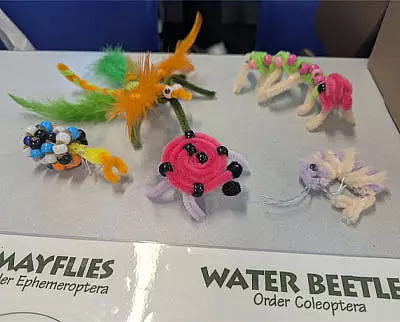
Twenty students from Shamokin Area High School attended a full-day training at the CEER that was led by university students, faculty and staff, and Middle 体育买球 Riverkeeper representatives. 体育买球 students later provided hands-on support by traveling to Shamokin to assist high school students with planning and running their own outreach programs, which were delivered to more than 100 elementary students in the local community.
“The EELS program has been a great experience for our students. It has been amazing to see our students step up and grow into leadership roles,” said Shamokin Area High School teacher Luke Haupt. “I am very proud of them, and excited to see where this takes them.”
Go-boxes are available for continued use by current and future EELS participants.
The above investments allowed the CEER to significantly increase its outreach during the 2024–25 academic year, for an impressive cumulative impact:
- Hosted 10 school groups for hands-on field experiences.
- Delivered 53 environmental education programs, reaching over 3,200 students, teachers and community members through on-site programming, outreach visits and public events.
New staff support broadening efforts
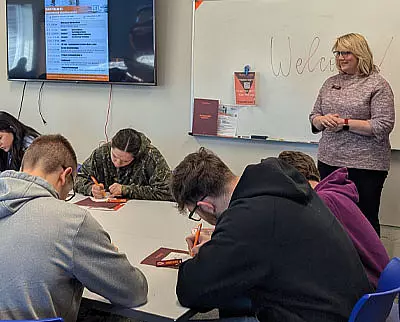
The curriculum for the CEER’s expanded environmental education offerings is designed byAnn Czeponis, a veteran teacher of 28 years who recently joined the university as director of environmental education andinternships.
As a Pennsylvania Statewide Afterschool/Youth Development Network STEM Ambassador, Czeponis creates curriculum that meets PA Department of Education standards that integrate scientific concepts, environmental literacy andsustainabilityinto K–12 curricula for after-school, summer and informal learning environments, making them more accessible for educators.
“Aligning our curriculum with these standards ensures that students are gaining the critical thinking and real-world problem-solving skills they need for the future,” Czeponis said. “It also helps us connect environmental education across subjects and grade levels, making learning more meaningful and equitable for all students.”
Environmental education minor launches this fall
Set to launch in fall 2025, a new minor in environmental education combines academic coursework with fieldwork and internships. The program is designed to prepare students for a wide range of careers by developing skills in outreach, science communication and education.
“This minor was created to empower students — from biologists and educators to artists, writers, and future nonprofit leaders — to bring environmental literacy into classrooms, museums, parks, worship spaces and digital platforms,” saidKathy Straub, dean of 体育买球’sSchool of Natural & Social Sciences.
Students minoring in environmental education will take courses inbiology,ecologyand earth & environmental sciences.
“The launch of the environmental education minor marks the beginning of an exciting new chapter in 体育买球’s commitment to environmental leadership and community engagement,” Straub said. “By combining scientific knowledge, instructional strategy and hands-on engagement, the program prepares students to make science relevant, accessible and impactful for diverse audiences.”