体育买球

Skip to main content
皇冠体育-皇冠体育博彩官网 博彩app-体育博彩app-体育博彩app推荐 体育博彩平台-体育博彩平台推荐 博彩平台-亚洲博彩网站 太阳城app-澳门太阳城app下载 新葡京博彩 澳门新葡京博彩官网 世界杯十大买球平台推荐 澳门博彩平台 世界杯压球

Biology

Conduct hands-on research in preparation for a career in biology.

Biology Degree

At 体育买球, you will discover your passion and gain the confidence and skills to follow it boldly.

From cell and molecular biology to genetics to ecology and evolution, the major equips students with a broad background in biology needed to pursue careers in the field. Learn biology through hands-on exploration and experimentation in the classroom and beyond.

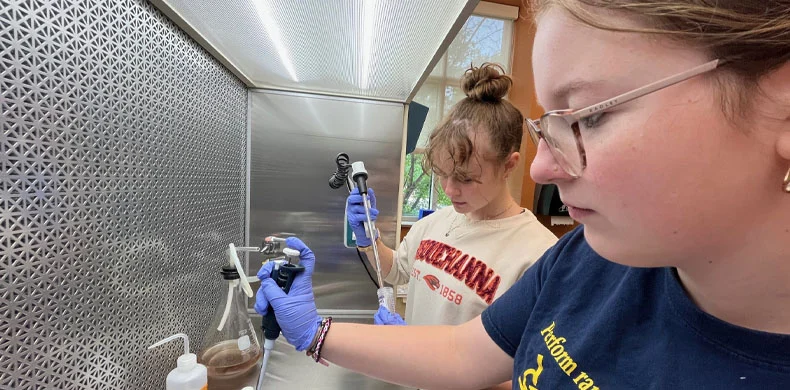
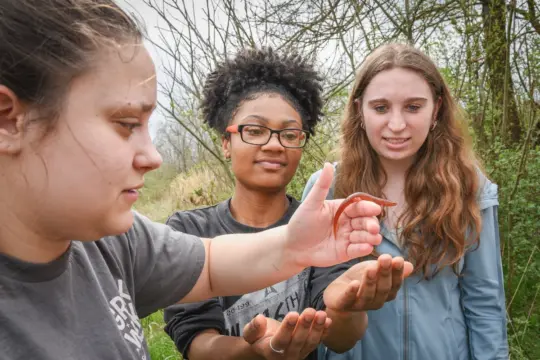
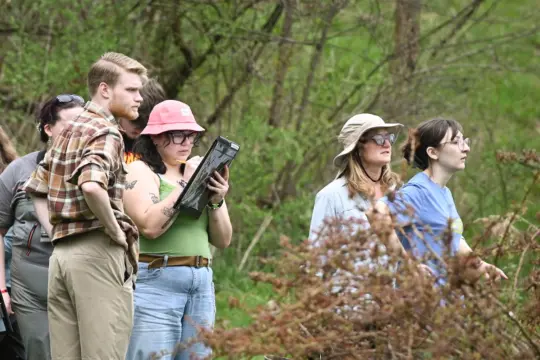
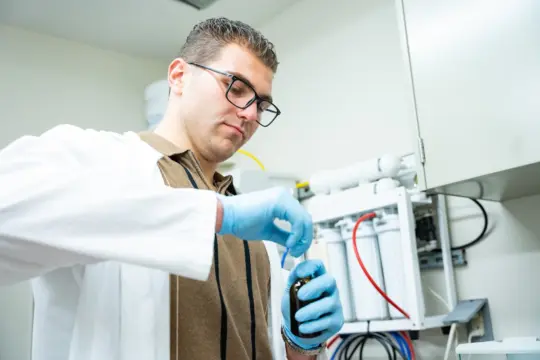
Most biology courses include a laboratory component where you will learn biology by doing biology —developing hypotheses, designing and running experiments, analyzing and interpreting your results. Outside the classroom, collaborative research with faculty is a hallmark of 体育买球’s program with some students starting as early as their first year. Many students co-author research papers and present at conferences with faculty mentors. Students can gain additional experience through internships in healthcare, research labs or fieldwork settings.

And you won’t be limited to 体育买球’s campus or the Selinsgrove area. Many students opt to gain a global perspective in the field while on a study-abroad experience, like those led by biology faculty in Australia and the Galápagos Islands.

PATHWAY TO SUCCESS

From your first day in the program, discover how 体育买球’s hands-on research opportunities can prepare you for a successful career in biology and biomedical sciences.

Two people are examining a small object under a magnifying lamp in a classroom. One is holding a pen, and both are focused on the task. Shelves with supplies can be seen in the background.

More Than Metrics

100%

of biology majors do research with faculty for course credit

75%+

of biology majors present at regional and national conferences

87-acre

field station adjacent to campus

100%

of students receive financial aid through academic merit scholarships and need-based grants

Straight from the Nest

Jenna Waldron
Isabel Proger
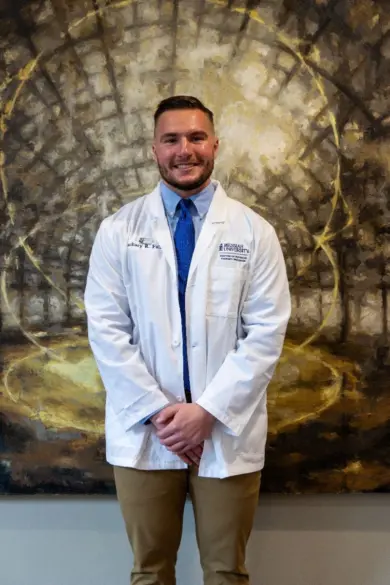
Photo of Vincent Kopysciansky

“Many of the classes I’ve taken have had a lot of opportunities for students to design their own experiments, which is really helpful to get you thinking through a scientific lens.”

Jenna Waldron ’27

“体育买球’s annual events have been significant to my time here at 体育买球. They host Thanksgiving dinner. President Green reads us Christmas stories. Events like those truly make it feel like a community. I also feel very connected to my professors, the staff and the student body in general.”

Isabel Proger ’25

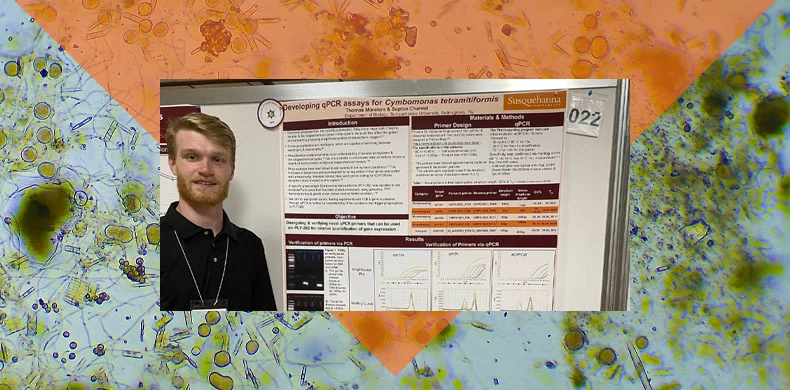
“As a STEM major at 体育买球, I spent hundreds of hours in the lab applying the important techniques that are vital to performing at a high level in my field.”

— Vincent Kopysciansky ’23

Explore Your Studies

program Resources

A Glance Into Your Degree Pathway

With support from advisors and course planning tools, your time at 体育买球 is carefully designed to help you succeed. This example provides a glimpse into your degree experience, but you’ll have plenty of opportunities to customize your path with electives or study abroad programs that reflect your passions and career goals.

First Year – Fall Semester
Code
Title
Credits
BIOL 101
Ecology and Evolution
4
4
Examination of descent with modification from a common ancestor, evidence for evolution, processes by which evolutionary changes occur, and how ecological interactions drive such changes. Course content will be linked to the five core concepts of biology (evolution; structure and function; information flow; energy transformations; and systems). Topics include the link between genotype and phenotype as it relates to natural selection and evolutionary change; mechanisms of microevolution; speciation processes; population growth and regulation; species interactions; and ecosystem structure and function. 4 SH. 3 lecture hours. 3 laboratory hours. CC: Scientific Explanations.
First Year – Spring Semester
Code
Title
Credits
BIOL 102
Cell Biology and Genetics
4
4

Examination of life at the cellular level, focusing on the five core concepts of biology (evolution, structure and function, information flow, engergy transformations, and systems). Topics include cell structure and function, protein structure and function as the link between genotype and phenotype, information flow from gene to protein, inheritance of traits in eukaryotic organisms, membrane structure and transport, energetics on the cellular level, cell cycle control and cancer. 4 SH. 3 lecture hours. 3 laboratory hours.

Second Year – Fall Semester
Code
Title
Credits
BIOL 205
Organismal Biology
4
4

Organismal Biology will focus on the level of the organism as the biological scale through which to build the student’s understanding of 5 core concepts in biology, evolution, information flow, structure-function relationships, energy transformations, and systems biology. This course is designed as an introductory course, meaning it introduces fundamental concepts that will be elaborated on and reinforced at a more sophisticated and deeper level in the more advanced courses that are taken as distribution requirements in the junior and senior year. Prerequisites: BIOL-101 and BIOL-102 or permission of the instructor. 4 SH.

CHEM 103
General Chemistry I
4
4

Fundamental laws and principles, atomic structure and periodicity, bonding, molecular structure, stoichiometry, chemical reactions, energy, equilibrium, thermodynamics and nuclear chemistry. Students may receive credit for only one of the three introductory chemistry I courses, CHEM-103, or CHEM-111. 4 SH. 3 lecture hours, 3 laboratory hours (taken as CHEM-105, not a separate credit/grade). CC: Scientific Explanations.

Second Year – Spring Semester
Code
Title
Credits
BIOL 220
Biostatistics
4
4

Biostatistics will focus on the collection and analysis of biological data. The course is designed to introduce students to the fundamental concepts of experimental and sampling design,as well as quantitative hypothesis testing. Some equations will be covered in the course; however, the emphasis will be on interpretation and presentation of statistical results. These concepts will be reinforced in upper level biology/ecology/neuroscience courses taken by students to fulfill distribution requirements during their junior and senior years. Prerequisites: Sophomore standing and either BIOL-101, BIOL-102,ECOL-100 or EENV 101. 4 SH. 4 lecture hours. CC: Analytical Thought.

CHEM 221
Organic Chemistry I
4
4

Basic concepts of stereochemistry and chemistry of aliphatic hydrocarbons, alkyl halides and alcohols. Prerequisite: CHEM-101, CHEM-103 or CHEM-111. 4 SH. 3 lecture hours, 3 laboratory hours (taken as CHEM 221L, not a separate credit/grade).

Third Year – Fall Semester
Code
Title
Credits
BIOL 560
Interdisciplinary Explorations Biology
2
2

Explores salient issues in the biological sciences from an interdisciplinary perspective. Prerequisite: Sophomore standing and either BIOL-101 or BIOL-102 or instructor’s permission. 2-4 SH. CC: Interdisciplinary

CHEM 222
Organic Chemistry II
4
4

Basic concepts of spectroscopy, and chemistry of aromatic hydrocarbons, conjugated alkenes, amines, ethers, carbonyl compounds, carboxylic acid derivatives, and carbohydrate building blocks. Prerequisite: CHEM-221. 4 SH. 3 lecture hours, 3 laboratory hours (taken as CHEM 222L, not a separate credit/grade). CC: Writing Intensive.

N/A
Program Elective
4
4

Biology

Choose from a variety of elective courses within this program to customize your goals.

Third Year – Spring Semester
Code
Title
Credits
N/A
Program Elective
4
4

Biology

Choose from a variety of elective courses within this program to customize your goals.

N/A
Program Elective
4
4

Biology

Choose from a variety of elective courses within this program to customize your goals.

N/A
Program Elective
4
4

Biology

Choose from a variety of elective courses within this program to customize your goals.

N/A
Program Elective
4
4

Biology

Choose from a variety of elective courses within this program to customize your goals.

Fourth Year – Fall Semester
Code
Title
Credits
BIOL 510
Student Research I
4
4

Introduces students to methods and techniques of biological research in the context of a collaborative research project. Required for students in the Group A track. Prerequisite: Instructor’s permission. 4 SH. 16 contact hours. Capstone.

N/A
Program Elective
4
4

Biology

Choose from a variety of elective courses within this program to customize your goals.

N/A
Program Elective
4
4

Biology

Choose from a variety of elective courses within this program to customize your goals.

N/A
Program Elective
4
4

Biology

Choose from a variety of elective courses within this program to customize your goals.

Fourth Year – Spring Semester
Code
Title
Credits
BIOL 511
Student Research II
4
4

Collaborative research with an emphasis on presentation of data and explanation of results. Required for students in the Group A track. Prerequisite: Instructor’s permission. 4 SH. 16 contact hours. Capstone. CC: Writing Intensive.

BIOL 560
Interdisciplinary Explorations Biology
2
2

Explores salient issues in the biological sciences from an interdisciplinary perspective. Prerequisite: Sophomore standing and either BIOL-101 or BIOL-102 or instructor’s permission. 2-4 SH. CC: Interdisciplinary

N/A
Program Elective
4
4

Biology

Choose from a variety of elective courses within this program to customize your goals.

N/A
Program Elective
4
4

Biology

Choose from a variety of elective courses within this program to customize your goals.

BIOL 010
Ecology and Evolution
4
4

Emphasizes analysis of biological problems relevant to the human experience and presents basic biological concepts in a variety of contexts. Subject matter might include medicine, environmental issues, ecology, molecular biology, physiology, and others. 4 SH. 3 lecture hours. 3 laboratory hours. CC: Scientific Explanations.

BIOL 101
Ecology and Evolution
4
4
Examination of descent with modification from a common ancestor, evidence for evolution, processes by which evolutionary changes occur, and how ecological interactions drive such changes. Course content will be linked to the five core concepts of biology (evolution; structure and function; information flow; energy transformations; and systems). Topics include the link between genotype and phenotype as it relates to natural selection and evolutionary change; mechanisms of microevolution; speciation processes; population growth and regulation; species interactions; and ecosystem structure and function. 4 SH. 3 lecture hours. 3 laboratory hours. CC: Scientific Explanations.
BIOL 101L
Ecology and Evolution Lab
0
0
BIOL 102
Cell Biology and Genetics
4
4

Examination of life at the cellular level, focusing on the five core concepts of biology (evolution, structure and function, information flow, engergy transformations, and systems). Topics include cell structure and function, protein structure and function as the link between genotype and phenotype, information flow from gene to protein, inheritance of traits in eukaryotic organisms, membrane structure and transport, energetics on the cellular level, cell cycle control and cancer. 4 SH. 3 lecture hours. 3 laboratory hours.

BIOL 102L
Cell Biology & Genetics Lab
0
0
BIOL 157
The Biology of Women
4
4

Examines the genetic and biological basis of gender difference, the unique biology of the female body and women’s healthcare issues. Topics include female reproductive anatomy and the menstrual cycle, pregnancy and birth, developmental differences in the sexes, and reproductive technologies. Also covers problems such as breast cancer, premenstrual syndrome and osteoporosis. Includes the role of women in the healthcare system as well as biology and science in general. Not for biology major or minor credit. Same as WGST-250. Pre-requisite: Sophomore standing. 4 SH. CC: Diversity Intensive, Interdisciplinary.

BIOL 205
Organismal Biology
4
4

Organismal Biology will focus on the level of the organism as the biological scale through which to build the student’s understanding of 5 core concepts in biology, evolution, information flow, structure-function relationships, energy transformations, and systems biology. This course is designed as an introductory course, meaning it introduces fundamental concepts that will be elaborated on and reinforced at a more sophisticated and deeper level in the more advanced courses that are taken as distribution requirements in the junior and senior year. Prerequisites: BIOL-101 and BIOL-102 or permission of the instructor. 4 SH.

BIOL 205L
Organismal Biology Lab
0
0

Organismal Biology Lab. Co-requisite: BIOL-205. 0SH

BIOL 220
Biostatistics
4
4

Biostatistics will focus on the collection and analysis of biological data. The course is designed to introduce students to the fundamental concepts of experimental and sampling design,as well as quantitative hypothesis testing. Some equations will be covered in the course; however, the emphasis will be on interpretation and presentation of statistical results. These concepts will be reinforced in upper level biology/ecology/neuroscience courses taken by students to fulfill distribution requirements during their junior and senior years. Prerequisites: Sophomore standing and either BIOL-101, BIOL-102,ECOL-100 or EENV 101. 4 SH. 4 lecture hours. CC: Analytical Thought.

BIOL 225
Organismal Form and Function
4
4

This course serves as an introduction to the systems of the body, including basic study of structure and function. Topics include an introduction to homeostasis, cells and tissues, as well as basic functions of the cardiovascular, respiratory, nervous, endocrine, digestive, urinary and reproductive systems. Upon completion, students should be able to demonstrate a basic understanding of the fundamental principles of anatomy and physiology and their interrelationships. Pre-requisites: BIOL-102 Cell Biology and Genetics. 4 SH

BIOL 300
Developmental Biology
3
3

Examines embryo development, focusing on cellular and regulatory mechanisms that guide the process. Topics include the events of development from fertilization through organogenesis in a range of animal systems from sea urchins through mammals. Prerequisite: BIOL-102. 3 SH. CC: Ethics Intensive.

BIOL 301
Developmental Biology Lab
1
1

An investigative approach to the study of animal development, emphasizing cellular and molecular techniques. Students work in small groups to conduct and analyze self-designed experiments with invertebrate embryos. Prerequisite: BIOL-102. 1 SH. 3 laboratory hours. CC: Ethics Intensive.

BIOL 302
Comparative Vertebrate Anatomy
3
3

Examines the evolutionary relationships among the vertebrate classes, using comparative morphological evidence. Utilizes an organ system approach to the study of anatomy, and considers unique adaptations of individual vertebrates. Prerequisite: BIOL-205. 3 SH.

BIOL 303
Comp Vertebrate Anatomy Lab
1
1

Organ-based study of representative vertebrates, including shark and cat dissections. Laboratory may not be taken without BIOL-302. Prerequisite: BIOL-205. 1 SH. 3 laboratory hours.

BIOL 306
Cell Biology
3
3

Examines the molecular aspects of cell structure and function and the molecular processes that regulate cell behavior. Emphasizes experimental and problem-based approaches, and includes information on the cell biology of human disease. Prerequisite: BIOL-102. 3 SH.

BIOL 307
Cell Biology Lab
1
1

Introduces the laboratory techniques commonly used in the study of cell biology. Includes labs on the isolation and characterization of proteins and nucleic acids. Laboratory may not be taken without BIOL-306. Prerequisite: BIOL-102. 1 SH. 3 laboratory hours.

BIOL 310
Animal Physiology
3
3

General and comparative physiology. Emphasizes membrane, neural, muscular and homeostatic physiology. Prerequisite: BIOL-102 and junior standing. 3 SH.

BIOL 312
Microbiology
3
3

An introduction to the morphology, physiology and genetics of microorganisms. Discusses the roles of microorganisms in the environment and in human disease. Prerequisite: BIOL-205 or ECOL-201. 3 SH

BIOL 313
Microbiology Lab
1
1

Emphasizes basic bacteriologic techniques, including staining, culturing and identification. Laboratory may not be taken without BIOL-312. Prerequisite: BIOL-205 or ECOL-201. 1 SH. 3 laboratory hours.

BIOL 315
Animal and Physiology Lab
1
1

A laboratory in general animal and human exercise physiology. Investigates the physiological basis of responses to exercise and extreme environments with an emphasis on neural, muscular, respiratory and cardiovascular mechanisms. Uses some animal models. Laboratory may not be taken without BIOL-310. Prerequisite: BIOL-205 and junior standing. 1 SH. 3 laboratory hours.

BIOL 316
Molecular Biology
3
3

Examines the structure and function of DNA and RNA of prokaryotes and eukaryotes. Topics include recombinant DNA technology, genomics and bioinformatics. Prerequisite: BIOL-102. CHEM-221 strongly recommended. 3 SH.

BIOL 317
Molecular Biology Lab
1
1

Investigates the structure and function of DNA through techniques of molecular biology. Topics include agarose gel electrophoresis, DNA hybridization and gene cloning. Laboratory may not be taken without BIOL-316. Prerequisite: BIOL-102. 1 SH. 3 laboratory hours.

BIOL 318
General Biochemistry
4
4

General Biochemistry is an upper-level course designed for majors in the biology department. It introduces and expounds upon the basic unifying principles of macromolecule structure, function, and metabolism. The course content covers 5 broad areas: structure, function, biosignaling, energy and metabolism. Prerequisites for this course are BIOL102 and CHEM221

BIOL 319
Advanced Genetics
4
4

This workshop-style course will explore advanced topics in the expression, evolution and inheritance of genetic material, as well as the modern techniques that are used in their analysis. It will also consider the ethical issues that arise from the generation and potential uses of the resulting knowledge. It will build upon the basic molecular and Mendelian genetics concepts taught at the introductory level. Prerequisite: BIOL 102 or permission of instructor. 4 SH. 3 lecture hours. 1 laboratory hour. CC:Ethics Intensive.

BIOL 324
Animal Behavior
3
3

Explores the adaptive value of animal behavior with an emphasis on theory and hypothesis testing using examples drawn from primary literature. Major topics include sexual selection, mating systems, parental care, sociality, foraging theory, antipredator behavior, game theory, and communication framed within an evolutionary context. Prerequisite: BIOL-101 or ECOL-100. 3 SH.

BIOL 325
Animal Behavior Lab
1
1

Field and laboratory techniques in behavioral data collection, experimental design and statistical analysis. Hypothesis development and testing emphasized. A portion of the grade is based on an independent research project. Laboratory may not be taken without BIOL-324. Prerequisite: BIOL-101 or ECOL-100. 1 SH. 3 laboratory hours.

BIOL 326
Invertebrate Zoology
3
3

An introduction to evolutionary themes and functional approaches to invertebrate animal biology. Course covers a broad survey of the invertebrate phyla. Within the coverage of each group, unique aspects of morphology, physiology, ecology, and behavior are discussed in light of the selective forces that have favored their evolution. Prerequisite: BIOL-205 or BIOL-304 or ECOL-110 or ECOL-201. 3 SH.

BIOL 327
Invertebrate Zoology Lab
1
1

An introduction to invertebrate phyla and subgroups with emphasis on form and functional morphology, organ systems, life history, ecology and behavior. Course includes dissections, examination of preserved material, demonstrations and observations of living animals. In addition, students organize an invertebrate collection based on local fauna. Laboratory may not be taken without BIOL-326. Prerequisite: BIOL-205 or BIOL-304 or ECOL-110 or ECOL-201. 1 SH. 3 laboratory hours.

BIOL 330
Conservation Biology
3
3

Explores patterns of local and worldwide biological diversity to better understand factors that generate hotspots of diversity, ways to measure diversity, value derived from biodiversity, and the variety of threats to diversity. Examines topics of basic ecology, including characteristics of individuals, populations and communities, and how conservation applies to these levels of diversity. Explores the design and management of protected areas and the role of people in them. All topics are infused with examples from local regions as well as from around the world in order to form connections between the theory and real life. Both BIOL-330 and BIOL-331 must be taken to satisfy the Ethics Intensive area of the Central Curriculum. Prerequisites: BIOL-101 or ECOL-100. 3SH. CC: Ethics Intensive.

BIOL 331
Conservation Biology Lab
1
1

Field and lab methods to measure biodiversity and the ecosystem services gained from biodiverse systems will be explored, as well as alternative approaches to manage and conserve biodiversity. Prerequisite: BIOL-101 or ECOL-100. Pre- or corequisite: BIOL-330. 1SH. CC: Ethics Intensive

BIOL 332
Population Biology
3
3

This course will introduce students to the biotic and abiotic factors that influence the size and trajectory of populations. Topics of the course will include understanding demographic rates, density independent and density dependent population growth rates, density, population dynamics of structured and non-structures populations,competitions, and predation. Prerequisite: BIOL-101 or ECOL-100. 3 SH.

BIOL 333
Population Biology Laboratory
1
1

This course will introduce students to methods used in estimating demographic rates and population parameters, such as age structure. Concepts fundamental to experimental design and statistical analysis of data will be stressed. Laboratory cannot be taken without BIOL-332. Prerequisite: BIOL-101 or ECOL-100. 1 SH. 3 laboratory hours.

BIOL 340
Marine Ecology
3
3

This course provides an examination of the ecology of marine and estuarine systems based on the principles of population biology and community ecology. Studies the ecology of the major marine communities: rocky intertidal and subtidal substrate, mangroves, salt marshes, kelp, soft substrate, estuarine, plankton, coral reef and deep sea. Emphasis is placed on current hypotheses concerning the processes controlling the distribution and abundance of organisms in these communities and critical evaluation of the primary scientific literature. Prerequisites: ECOL-201, or BIOL-205, or EENV-220. 3SH.

BIOL 341
Marine Ecology Laboratory
2
2

This course is a 9 day field course where we compare marine ecosystems in the Bahamas or other locations investigating their structure and function. During the field days, we sample different parts of the ecosystems (the pelagic system, coral reefs, mangroves, and hard- and soft benthic communities and their associated fauna and fish communities). Field work is performed as group projects that have been planned and designed in advance by the students. Prerequisites:BIOL 340 and either ECOL-201, BIOL-205, or EENV-220. 1SH.

BIOL 350
Investigative Problems in Biology
4
4

Offered as a capstone experience for biology majors in Group B. Provides an authentic research experience based in the area of expertise of the supervising faculty. Students will learn important laboratory and/or field approaches to collect novel data in order to answer research questions. Course elements include experimental design, data collection and analysis, and presentation in oral and written formats. Prerequisites: Senior standing, BIOL-205, and either BIOL-220 or MATH-108 or MATH-180, or permission of the instructor. 4 SH. Capstone.

BIOL 400
Immunology
3
3

Investigates how the immune system defends vertebrate organisms against invasion by pathogenic microorganisms. Discusses recognition of antigens and interactions between components ofthe immune system from a molecular perspective. Prerequisite: BIOL-102. 3 SH.

BIOL 401
Immunology Lab
1
1

Techniques used in immunological studies. Topics include antibody purification, immunofluorescence and Western blot analysis. Laboratory cannot be taken without BIOL-400. Prerequisite: BIOL-102. 1 SH. 3 laboratory hours.

BIOL 404
Plant Physiology
3
3

The physiology of photosynthetic organisms. Includes photosynthesis, translocation, metabolism, mineral nutrition, photoperiodism, hormones, growth and development. Prerequisite: BIOL-205. 3 SH.

BIOL 405
Plant Physiology Lab
1
1

A series of experiments designed to illustrate the unique physiology of photosynthetic organisms. Laboratory may not be taken without BIOL-404. Prerequisite: BIOL-205. 1 SH. 3 laboratory hours.

BIOL 408
Aquatic Ecology
3
3

The ecology of freshwater ecosystems. Emphasizes biota of freshwater and their relationships with physical and chemical components of lakes, streams and reservoirs. Same as ECOL-408. Prerequisite: BIOL-101 or ECOL-100. 3 SH.

BIOL 409
Aquatic Ecology Lab
1
1

Field laboratory in aquatic ecology techniques. Topics include physical and chemical measurements and the identification and enumeration of phytoplankton, zooplankton, aquatic plants and benthic organisms. Same as ECOL-409. Laboratory may not be taken without BIOL-408 (or ECOL-408). Prerequisite: BIOL-101 or ECOL-100. 1 SH. 4 laboratory hours.

BIOL 440
Behavioral Neuroendocrinology
3
3

This course deals with the interrelationships among hormones, the brain, and behavior. The role of the nervous system and hormones in the development and regulation of behavior, as well as how experience can regulate neuroendocrine physiology, will be examined. This course puts special emphasis on generating and testing hypotheses based on knowledge gained from reviewing the primary literature. Specific topics covered include the endocrine regulation of reproductive behavior, aggressive behavior, biological rhythms, energy balance, stress, learning,and memory. Prerequisite: BIOL-205. Corequisite: BIOL-441. 3 SH. CC: Writing Intensive.

BIOL 441
Behavioral Neuroendocrinology Lab
1
1

This course investigates the experimental methodology used by behavioral neuroendocrinologists to investigate the interrelationships among hormones, the brain, and behavior. The course provides hands-on learning about laboratory techniques that examine neuropeptides, hormones, brain structures, and behavior, as well as proper use of animals in research, experimental design, and statistical analysis. Hypothesis development and testing is emphasized, and a portion of the grade is based on an independent research project. Prerequisite: BIOL-205. Corequisite: BIOL-440. 1 SH. 3 laboratory hours. CC: Writing Intensive.

BIOL 455
Functional Neuroanatomy
4
4

This course is a detailed look at the sophisticated cellular and molecular mechanisms in the nervous system and how these mechanisms provide the foundation for circuits and functional neuroanatomical structures capable of generating complex behaviors and physiological functions. This course connects functional cellular and anatomical units of the nervous system to behaviors typically addressed by the field of psychology, such as learning, motivation, addiction, and psychological disorders. The intial material focuses on the molecular structure and function of neurons and then builds upon this foundation by progressively assembling the functional neuroanatomical structures of the nervous system and considering the complex behaviors that these structures generate. Prerequisites: BIOL-102, PSYC-101 and junior standing or instructor’s permission. 4 SH. 3 lecture hours, 3 laboratory hours. CC: Interdisciplinary.

BIOL 500
Topics in Biology
1-4
1-4

Varying topics of interest to students and instructor. Possible topics include genetic engineering advances in embryology, plant products, reproductive physiology and stress ecology. Prerequisites: Prior course in general topic area and instructor’s permission. Variable credit.

BIOL 502
Biology Internship
1-2
1-2

Career investigation for junior and senior biology majors. May be repeated once. A written report of the internship will be required. Prerequisite: First two years of the biology major program. 1 SH.

BIOL 504
Independent Study
1-4
1-4

Investigation of a specific topic or problem in biology under the guidance of an appropriate faculty member. 1-4 SH.

BIOL 510
Student Research I
4
4

Introduces students to methods and techniques of biological research in the context of a collaborative research project. Required for students in the Group A track. Prerequisite: Instructor’s permission. 4 SH. 16 contact hours. Capstone.

BIOL 511
Student Research II
4
4

Collaborative research with an emphasis on presentation of data and explanation of results. Required for students in the Group A track. Prerequisite: Instructor’s permission. 4 SH. 16 contact hours. Capstone. CC: Writing Intensive.

BIOL 560
Interdisciplinary Explorations Biology
2-4
2-4

Explores salient issues in the biological sciences from an interdisciplinary perspective. Prerequisite: Sophomore standing and either BIOL-101 or BIOL-102 or instructor’s permission. 2-4 SH. CC: Interdisciplinary

BIOL 565
Assisted Reproductive Technologies and Genome Editing
4
4

The course will explore the scientific basis of different Assisted Reproductive Technologies (ART) and genome editing technologies (GET). The medical, public health, societal, environmental, and economic impacts that result from the use of ART & GET, and ethical issues pertaining to disparities in access to ART & GET based on insurance coverage, race, ethnicity, and geography will also be examined. Pre-requisites: Sophomore standing and BIOL-102 or Instructor’s permission. 4SH. CC: Interdisciplinary, Ethics Intensive.

When you enroll at 体育买球, you’ll be paired with an advisor and application tool to guide you in your course planning and scheduling. The following is an excerpt from thecomplete course catalog. Enrolled students follow the requirements of the course catalog for the academic year in which they declare each major and/or minor, consult with their advisor(s).


Learning Goals

Students graduating with a biology or biomedical sciences major will:

  • be able to identify and describe the basic principles and theories of the biological sciences
  • develop an understanding of a relevant body of knowledge and use that understanding to construct logical arguments and position their arguments in the larger context of biology
  • understand the appropriate use of lab and field methods to acquire data, the tools to analyze and/or visualize data, and the ability to interpret data
  • understand the nature of science as a way of knowing and the practice of science as a social and cultural endeavor, with the goal of explaining nature
  • be able to recognize how basic scientific principles and theories are relevant to the broader liberal arts curriculum as well as to their daily lives.

Major in Biology

The Bachelor of Science degree in biology requires 60 semester hours in biology, chemistry and physics with grades of C- or better in biology. The Bachelor of Science degree includes an introductory sequence, biology distribution requirements (in cell and molecular biology, organismal biology, and ecology and evolution), and other requirements as outlined below. In addition, all students must complete a research capstone requirement (either Group A or Group B track).

16 Introductory Sequence

  • 4 BIOL-101 Ecology and Evolution
    • andBIOL 101L Ecology and Evolution Lab
  • 4 BIOL-102 Cell Biology and Genetics
    • andBIOL-102L Cell Biology and Genetics Lab
  • 4 BIOL-205 Organismal Biology
  • 4 BIOL-220 Biostatistics

16–20 Biology Distribution Requirements

Cell and Molecular Biology

Choose from one of the following:

  • 3 BIOL-300 Developmental Biology
  • 3 BIOL-306 Cell Biology
  • 3 BIOL-316 Molecular Biology
  • 3 BIOL-319 Advanced Genetics
  • 3 BIOL-400 Immunology

Organismal Biology

Choose from one of the following:

  • 3 BIOL-302 Comparative Vertebrate Anatomy
  • 3 BIOL-310 Animal Physiology
  • 3 BIOL-312 Microbiology
  • 3 BIOL-404 Plant Physiology
  • 3 BIOL-440 Behavioral Neuroendocrinology
  • 3 BIOL-455 Functional Neuroanatomy
  • 3 ECOL-110 Biogeodiversity

Ecology and Evolution

Choose from one of the following:

  • 3 BIOL-324 Animal Behavior
  • 3 BIOL-326 Invertebrate Zoology
  • 3 BIOL-330 Conservation Biology
  • 3 BIOL-332 Population Biology
  • 3 BIOL-340 Marine Ecology
  • 3 BIOL-408 Aquatic Ecology
  • 3 ECOL-201 Community and Ecosystems Ecology

3 Laboratory courses taken concurrently with lecture or after the lecture has been completed

4-8 At least twodifferentcourse offerings from:

  • 2-4 BIOL-560 Interdisciplinary Explorations in Biology*
  • 4 BIOL-565 Assisted Reproductive Technologies and Genome Editing*
  • 2 BIOL-157 The Biology of Women
  • 2 ECOL-560 Interdisciplinary Explorations in Ecology

*Students taking a 4-semester hour course from the above list, must still take a second course. Two BIOL-560 courses may be taken to satisfy this requirement if the courses are address different topics.

Other Requirements

8 Capstone

Based upon their qualifications and career goals, students may opt for collaborative research experience with a faculty mentor (Group A), or they may elect to take a classroom-based research experience (Group B). Each track contains a component that fulfills the capstone requirement for the major (i.e., BIOL-510 in the case of Group A and BIOL-350 in the case of Group B).

Group A:

  • 4 BIOL-510 Student Research I
  • 4 BIOL-511 Student Research II

Group B:

  • 4 BIOL-350 Investigative Problems in Biology
  • 4 Biology elective courses at the 200 level or above

20 Corollary Courses

  • 4 CHEM-103 or CHEM-111 General Chemistry I
  • 4 CHEM-221 Organic Chemistry I
  • 4 CHEM-104 orCHEM-232 General Chemistry II,orCHEM 222 Organic Chemistry II

8 Choose 8 additional semester hours from the following courses:

  • BIOL-318 General Biochemistry
  • CHEM-104 or CHEM-232 General Chemistry II or
  • CHEM-222 Organic Chemistry II (whichever was not previously counted as a corollary course above)
  • CHEM-242 Methods of Chemical Analysis
  • CHEM-302 Medicinal Chemistry
  • CHEM-305 Forensic Chemistry
  • CHEM-306 Nanoscience
  • CHEM-313 Biotechnology
  • CHEM-314 Survey of Biochemistry
  • CHEM-422 The Biochemistry of Nucleic Acids
  • CHEM-423 Biochemistry Nucleic Acids Laboratory
  • CHEM-424 The Biochemistry of Metabolism
  • CHEM-426 The Biochemistry of Proteins and Enzymes
  • CHEM-427 Biochemistry of Proteins and Enzymes Laboratory
  • CHEM-429 Biochemistry of Metabolism Laboratory
  • CHEM-311 Analytical Chemistry
  • CSCI-151 Introduction to Programming
  • CSCI-181 Principles of Computer Science
  • CSCI-301 Data Mining
  • PHYS- 202 or PHYS-204 Introductory Physics I
  • PHYS-205 or PHYS-206 Introductory Physics II

Honors in Biology

The departmental honors program encourages and recognizes superior academic performance in biology. Candidates for academic honors must:

  • Maintain a cumulative GPA of 3.25 and a GPA of 3.50 in biology courses to qualify for academic honors.
  • Successfully complete Student Research I and II (BIOL-510 and BIOL-511) or BIOL-350, and earn a grade of B- or better in these courses.

Candidates for research honors must:

  • Be nominated by a member of the biology faculty by midterm of Student Research II (BIOL-511).
  • Submit an acceptable research thesis based upon two semesters of Student Research (BIOL-510 and BIOL-511).
  • Pass an oral comprehensive examination of their thesis in their final semester.

Secondary Teaching Certification

Secondary Teaching Certification Coursework required by the state of Pennsylvania for admission to the teacher certification program includes successful completion of FYSE-100 or equivalent course (having learning goals related to English composition), at least 3 semester hours in British or American literature, at least 6 semester hours of mathematics coursework (or other courses which satisfy the Central Curriculum Analytical Thought requirement) and at least one 40-hour externship.

Education requirements for secondary education are:

  • EDUC-101 Introduction to Education and Society
  • EDUC-250 Educational Psychology
  • EDUC-260 Introduction to Special Education
  • EDUC-270 Instruction of Exceptional Students
  • EDUC-330 Technology in Education
  • EDUC- 350 English Language Learners: Theory and Instruction
  • EDUC-380 Instructional Design
  • EDUC-424 Methods of Curriculum, Instruction, and Assessment in Teaching Science
  • EDUC-479 Principles of Learning and Teaching in Secondary Education
  • EDUC-483 Differentiated Instruction and Classroom Management in Secondary Education
  • EDUC-500 Student Teaching package (EDUC-501, EDUC-502, EDUC-503, and EDUC-600)

In addition, secondary education biology students complete all of the usual requirements for the biology major.

When you enroll at 体育买球, you’ll be paired with an advisor and application tool to guide you in your course planning and scheduling. The following is an excerpt from thecomplete course catalog. Enrolled students follow the requirements of the course catalog for the academic year in which they declare each major and/or minor and consult with their advisor(s).


Minor in Biology

Students minoring in biology complete 20 semester hours, including BIOL-101 Ecology and Evolution, BIOL-102 Cell Biology and Genetics, and BIOL-205 Organismal Biology. Students choose additional biology courses at the 200-, 300- or 400-level. Although BIOL-500, BIOL-502, and BIOL-560 may apply to the minor, other courses at the 500-level may not be taken for minor credit. At least one laboratory course is required in addition to BIOL-101, BIOL-102, and BIOL-205.

  • Research Scientist
  • Physician
  • Public Health Professional
  • Environmental Specialist
  • Science Writer

Experience science in the field

Hands-On Learning and Research

体育买球 University’s CEER Field Station is an 87-acre living lab where students bring ideas to life. Through fieldwork and lab studies, you’ll explore geophysics, monitor water tables and work with solar arrays and climate stations. These experiences give you the skills and knowledge to tackle real-world challenges in your career and beyond.

Aerial view of a rural landscape featuring a large red barn with a white roof, surrounded by lush green fields. A paved road runs alongside the barn. In the background, a field with rows of solar panels is visible. Trees and greenery are scattered throughout.

SUSQUEHANNA BIOLOGY MAJORS SET NEW RECORDS

体育买球’s emphasis on research opportunities and interdisciplinary studies helps prepare our biology students for success. Sydney Salas ’23 won a prestigious National Science Foundation (NSF) internship to study the neurobiology of aging and degenerative diseases. She was the youngest person to work in Cornell’s high-tech molecular biology lab.
TAKE A VIRTUAL TOUR

Launch Natural Sciences Center
Have Questions?

Contact Us

Biology

514 University Ave.
Selinsgrove, PA 17870

Location

Natural Sciences Center

Start your journey.

皇冠体育-皇冠体育博彩官网 博彩app-体育博彩app-体育博彩app推荐 体育博彩平台-体育博彩平台推荐 博彩平台-亚洲博彩网站 太阳城app-澳门太阳城app下载