体育买球

Skip to main content
皇冠体育-皇冠体育博彩官网 博彩app-体育博彩app-体育博彩app推荐 体育博彩平台-体育博彩平台推荐 博彩平台-亚洲博彩网站 太阳城app-澳门太阳城app下载 世界杯投注 世界杯买球 澳门新葡京娱乐 IM体育平台 足球外围平台推荐

Philosophy

Engage with the fundamental questions of ethics, reasoning and what it means to think critically.

Philosophy Degree

With a philosophy degree from 体育买球 University, you’ll learn to analyze, write, persuade and examine both sides of an argument — developing critical thinking skills to improve yourself and the world around you.

Philosophy knocks at the door of the soul.体育买球 prides itself on offering the rare combination of classical philosophical training with innovative, contemporary and diverse course offerings. You’ll learn from experienced faculty members representing a range of philosophical traditions, disciplinary backgrounds and life experiences. You and your classmates will engage with fundamental questions about reality, knowledge and value as part of an interdisciplinary intellectual life led by 体育买球 faculty working across several disciplines.

Philosophy graduates have many career options including business, law, medicine, journalism, finance and computer science with one of the fastest salary growth rates. If graduate school is in your future, philosophy majors outperform most other majors on standardized tests for graduate study, outscoring others on the LSATs, GMAT and GREs.

real-world preparation

PHILOSOPHY FOR THE GENERATIONS

Philosophy may have begun in the ancient world, but it is alive and thriving today in the 体育买球 Valley where you have numerous opportunities to put your reasoning and problem-solving skills to work in the classroom, for internships or in the marketplace.

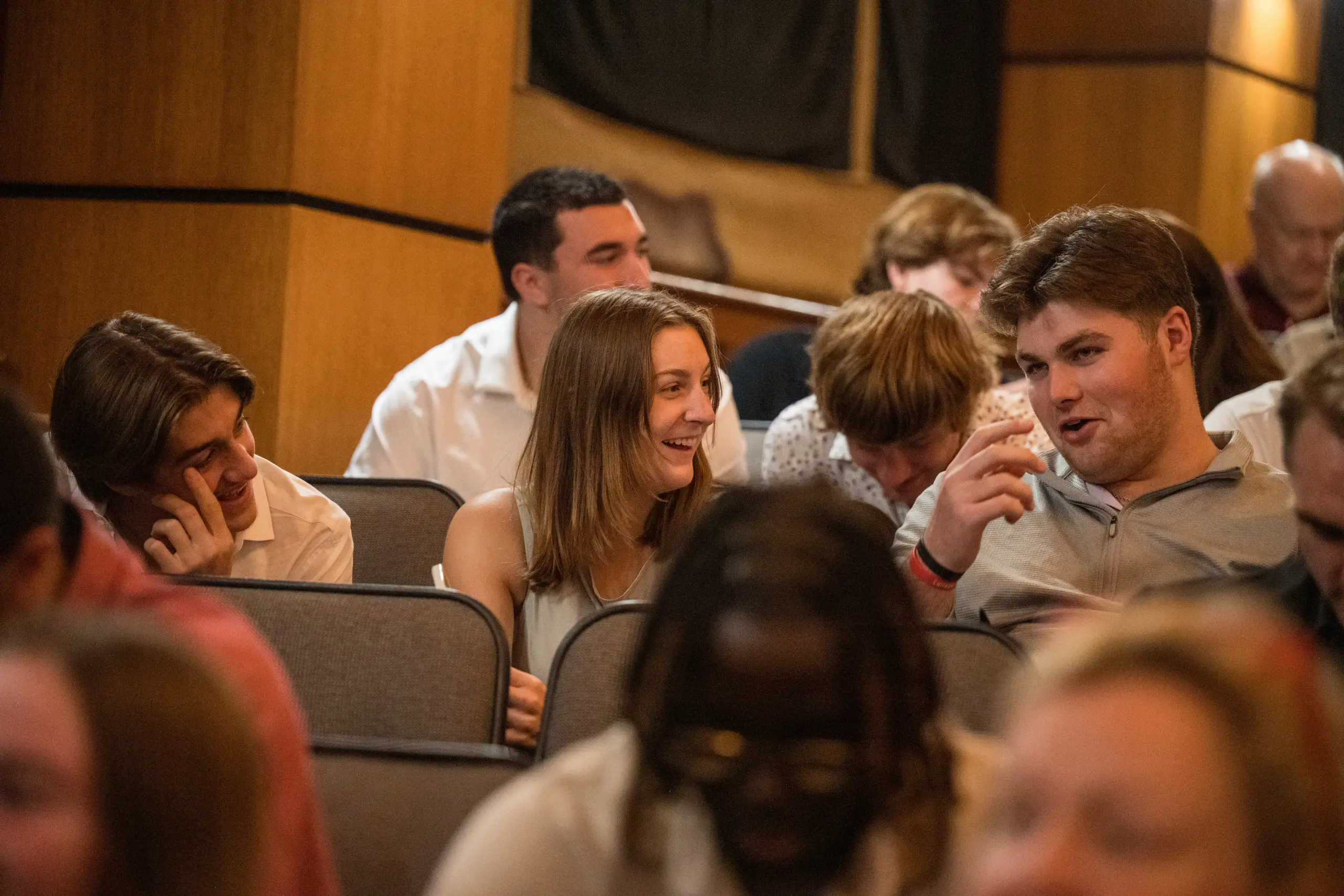
A group of people sit in an auditorium, engaged in conversation and smiling. The atmosphere feels casual and friendly as they discuss philosophy, exchanging ideas and chatting before the event begins.

More Than Metrics

100%

of students can participate in undergraduate research with a faculty mentor

97%

of 体育买球 students study abroad

100%

of students receive financial aid through academic merit scholarships and need-based grants

12%

Top ranked among U.S. colleges for students graduating in 4 years

College Raptor

Explore Your Studies

Program Resources

PHIL 101
Problems in Philosophy
4
4
An introduction to philosophy and philosophical problems. Emphasizes standards and ideals of morality and truth. 4 SH. CC: Ethics.
PHIL 105
Philosophy of Love & Desire
4
4

An introduction to philosophy, this course examines theories of love, desire, and friendship from ancient, medieval, modern, 19th and 20th century philosophers. 4 SH. CC: Ethics.

PHIL 122
Resolving Moral Conflicts
4
4

Investigates problems involved in moral decision making, providing students with a better understanding of what it means to be a good individual, a good family member, and a good citizen of the nation and world. 4 SH. CC: Ethics.

PHIL 125
Justice
4
4

This introductory course is a philosophical inquiry into the idea of justice. Rather than focusing on personal morality, we will investigate issues of public policy. How ought we, through our laws and institutions, distribute the benefits and burdens of society — income and wealth, duties and rights, powers and opportunities, offices and honors? Philosophical writings as well as practical issues that illustrate competing theories of justice will be investigated. 4 SH. CC: Ethics.

PHIL 140
The Good Life
4
4

This course examines two related areas of ethics: Theories of the good life or well-being make up the first. Engaging perspectives from various disciplines, we take up questions like ‘what makes a life go well?’ and ‘what is worth pursuing for its own sake?’ The good life involves not simply feeling good but also being good and doing right by others. Knowing how we should treat one another can be aided by having a grasp of general moral ideals. Normative ethics is the term for this area of inquiry, and occupies the latter part of the course. 4SH. CC: Ethics.

PHIL 150
Race, Class, and Ethics
4
4

Examines ethical theory and practice in connection with the relevant social and political philosophy, focusing on the philosophical issues that arise in everyday life. 4SH. CC: Ethics, Diversity Intensive.

PHIL 210
Philosophy of Religion
4
4

Focus on classical and contemporary writings to determine the credibility of religious faiths and beliefs. Same as RELI-210. 4 SH. CC: Diversity Intensive.

PHIL 211
Existentialism
4
4

An intensive study of the themes and ideas that inform different existentialist texts. This course also examines the historical context for the emergence of this contemporary school of thought. Prerequisite: Sophomore standing. 4 SH. CC: Ethics Intensive, Interdisciplinary.

PHIL 212
Feminist Philosophy
4
4

An examination of the various forms of feminist philosophy (e.g., liberal feminism, radical feminism, existential feminism, Marxist/socialist feminism, psychoanalytic feminism, postmodern feminism, eco-feminism, multicultural & global feminism). Emphasizes how feminism differs from common (mis)understandings of it. Some attention is also given to various women in professional philosophy. Same as WGST-200. 4 SH. CC: Diversity.

PHIL 213
Symbolic Logic
4
4

Examines basic procedures for determining the validity or invalidity of deductive arguments. Emphasizes standard notations, principles and methods used in modern symbolic logic. Also covers aspects of set theory. 4 SH. CC: Analytical Thought.

PHIL 214
Black Existentialism
4
4

This course examines the work of key figures in black existential philosophy from the early twentieth century to the present day. These philosophers take up ideas central to the existentialist movement in the course of analyzing the lived conditions of black life under systems of colonialism and antiblack racism. Prerequisite: Sophomore standing. 4 SH. CC: Interdisciplinary, Diversity Intensive, Ethics Intensive.

PHIL 221
Applied Ethics
2-4
2-4

Examines a variety of practical ethical issues and problems using the tools of philosophical analysis and moral theory. Subject area for course will change on a rotating basis and will include ethics of war and peace and environmental ethics. 2-4 SH. CC: Ethics Intensive.

PHIL 222
Advanced Ethical Theory
4
4

Principal theories of moral value and duty in the history of Western thought as well as in contemporary philosophy. Readings may include works from such thinkers as Plato, Aristotle, Kant, Mill, Schopenhauer, Nietzsche, Held, Korsgaard, Hursthouse, Hooks, Bordo, de Waal, MacIntyre, Blackburn, and Lear. Prerequisite: One course in philosophy or instructor’s permission. 4 SH. CC: Ethics.

PHIL 223
Business Ethics
4
4

A systematic and philosophically informed consideration of some typical moral problems faced by individuals in a business setting, and a philosophical examination of some common moral criticisms of the American business system. 4 SH. CC: Ethics Intensive.

PHIL 224
Bioethics
4
4

Examines the major ethical controversies in medicine, subjecting them to close philosophical analysis. Subjects addressed include the patient/doctor relationship, informed voluntary consent, beginning and end of life issues, abortion, reproductive rights, genetic therapies and cloning, human subject medical experimentation, and health care resource allocation. 4 SH. CC: Ethics, Diversity Intensive

PHIL 226
Philosophy, Ethics and the Environment
4
4

This course centers on ethical issues surrounding consumption, both of food and fuel. We examine the environmental and moral implications of our agricultural practices, factory farming, and energy use and production with particular attention to climate change. We will examine foundational questions in environmental ethics concerning the value and moral standing of elements of the environment, including wide-ranging questions about human beings’ proper relationship with the natural environment and with non-human forms of life, as well as our relationships with one another. 4 SH. CC: Ethics.

PHIL 228
Neuroethics
4
4

Examines ethical, legal and social issues raised by developments in the neurosciences and related technologies. 4 SH. CC: Ethics Intensive.

PHIL 231
Philosophy of Science
4
4

Investigates the logic of the scientific method, the history of scientific thought and the philosophical underpinnings of modern science. Focuses on developing an understanding of the nature, origins and growth of modern science and the application of scientific knowledge to human affairs. Prerequisites: sSophomore standing. 4 SH. CC: Interdisciplinary.

PHIL 235
Aesthetics
4
4

Examines artistic and aesthetic values reflected in both past and present philosophies of art and beauty. Readings may include selections from Plato, Aristotle, Hume, Kant and Tolstoy, as well as 20th-century philosophers and artists. 4 SH. CC: Artistic Expression.

PHIL 240
Being Awesome At Life
4
4

This course offers a cross-cultural examination of the pursuit of a good human life, and how one learns to live better. In other words, it is about the theory and practice of being awesome at life. We focus on ethical dispositions (skills, habits, and virtues) as critical features of ethics, explored through texts from various religious and philosophical figures in English translation, as well as film and other media. Prerequisite: Junior standing. Previous experience in philosophy or religious studies will be very helpful, but not required. 4 SH. CC: Ethics.

PHIL 241
Ancient Philosophy
4
4

The origins of Western philosophical thought in ancient Greece and Rome. Emphasizes Plato, and Aristotle, and the Stoics. 4 SH. CC: Ethics Intensive.

PHIL 243
Modern Philosophy
4
4

Focuses on the ideas of European and British philosophers from Descartes through Kant. 4 SH. CC: Writing Intensive.

PHIL 245
19th and 20th Century Philosophy
4
4

This course is a study of works by noted philosophers in the nineteenth and twentieth centuries that represent the dominant movements that arose in response to the critique of idealism and metaphysics, such as existentialism, phenomenology, psychoanalytic theory, analytic philosophy, and postmodern philosophy. 4 SH.

PHIL 255
The Republic & HBO’s The Wire
4
4

This course examines HBO’s The Wire in comparison with Plato’s Republic. Both the Republic and The Wire concern life in a city and which factors foster justice and which foster injustice. These texts raise philosophical questions, such as: What is justice? Who should rule? What are the obligations of rulers? How should children be educated? Who is best suited to protect the city, and how should they be educated for this important job? How should desire be managed in society? Our task is, first, to work to understand the philosophizing being done in both these texts, and second, to philosophize on our own about the topics raised by both texts. 4 SH. CC: Diversity, Ethics Intensive.

PHIL 301
Plato Seminar
4
4

An intensive study of the works of Plato. Topics may vary and may include Plato’s theory of education, Plato and the Greek literary tradition, Plato’s Republic, the role of the body in Plato’s epistemology, dialectic and dramatic dialogue. 4 SH. Writing Intensive.

PHIL 305
Topics in Philosophy
2-4
2-4

Examines selected topics in philosophy, depending on student and instructor interest. Course may be repeated for credit if topic is different. 2-4 SH.

PHIL 312
Theories of Knowledge & Reality
4
4

Do we have knowledge of the world around us, the so-called external, objective world? Are there any objective truths about the world for us to discover? If there are, how do we come to have knowledge of these truths? These and other related questions of epistemology will constitute the subject matter of this course. 4 SH.

PHIL 315
Philosophy of Mind
4
4

Investigates philosophical questions about the nature of the mind, its relation to the brain and body, perception, and consciousness. Focuses on the role of scientific evidence in understanding the mind. Prerequisites: Sophomore standing or above. 4 SH. CC: Interdisciplinary.

PHIL 320
Moral Psychology
4
4

This course is a study of the human moral mind from both a philosophical and scientific perspective. How do we determine what’s morally right and wrong? Why do we act morally? and Why do we sometimes fail? Many such philosophical questions about morality have been illuminated by recent work in psychology and neuroscience. Our aim is to integrate varied disciplinary approaches to make progress in addressing both the practical and theoretical dimensions of these questions. Prerequisite: One course in philosophy or psychology, and sophomore standing. 4 SH. CC: Interdisciplinary, Ethics Intensive, Writing Intensive

PHIL 400
Independent Study
1-4
1-4

Individual work on selected topics for qualified students under faculty direction. Requires approval of supervising professor and department head. 1-4 SH.

PHIL 500
Directed Reading and Research
2-4
2-4

Study of a specific topic in the field for qualified students in consultation with the department. 2-4 SH. Capstone.

When you enroll at 体育买球, you’ll be paired with an advisor and application tool to guide you in your course planning and scheduling. The following is an excerpt from thecomplete course catalog. Enrolled students follow the requirements of the course catalog for the academic year in which they declare each major and/or minor, consult with their advisor(s).


Learning Goals

  • Read texts/arguments in a reflective and critical manner.
  • Write in a coherent and persuasive manner.
  • Understand and apply logical thinking skills in evaluating arguments.
  • Be literate with respect to various historical periods, philosophers, and sub-fields.

Major in Philosophy

Philosophy majors complete at least 36 hours in philosophy, with a grade of C- or better. To graduate with a philosophy major, students must have a minimum GPA of 2.00 in their philosophy courses.

Requirements:

  • 4 PHIL-213 Symbolic Logic
  • 4 PHIL-241 Ancient Philosophy
  • 4 PHIL-243 Modern Philosophy

4 One 4 SH course from this list of ethics courses:

  • PHIL-101Problems in Philosophy
  • PHIL-105 Philosophy of Love and Desire
  • PHIL-122 Resolving Moral Conflicts
  • PHIL-125 Justice
  • PHIL-130The Good Life
  • PHIL-150Race, Class, and Ethics
  • PHIL-221Applied Ethics
  • PHIL-222 Advanced Ethical Theory
  • PHIL-224Bioethics
  • PHIL-226Philosophy, Ethics, and the Environment
  • PHIL-228Neuroethics

4 One 4 SH course from this list:

  • PHIL-210 Philosophy of Religion
  • PHIL-211 Existentialism
  • PHIL-212 Feminist Philosophy
  • PHIL-214 Black Existentialism
  • PHIL-222 Advanced Ethical Theory
  • PHIL-231 Philosophy of Science
  • PHIL-235 Aesthetics
  • PHIL-245 19th/20thCentury Philosophy
  • PHIL-255 Plato’sRepublicand HBO’s The Wire

8 Two 4 SH courses from this list:

  • PHIL-301 Plato Seminar
  • PHIL-305 Topics in Philosophy
  • PHIL-312 Theories of Knowledge and Reality
  • PHIL-315 Philosophy of Mind
  • PHIL-320 Moral Psychology

Capstone Requirement

Students majoring in only philosophy are expected to take PHIL 500: Directed Reading and Research to serve as a culmination of all their studies, allowing them to address a particular topic, issue or thinker in philosophy through the lens of their total undergraduate education.

A student with philosophy as a double major may fulfill the university capstone requirement in a major outside of this department. Any double-majoring student who elects to fulfill the capstone requirement in another major must still complete at least 36 hours in philosophy.

Any student wishing to qualify for philosophy departmental honors must successfully complete PHIL500 in addition to any capstone requirements imposed in a second major.

Honors

The honors program in philosophy encourages and commends outstanding academic work. To graduate with departmental honors in philosophy, students must do the following:

  • Complete requirements for the major,
  • Have a cumulative GPA of at least 3.00 overall and at least 3.50 in philosophy, and
  • Perform outstanding academic work in at least one course of directed readings and research in philosophy.

Capstone Requirement

Students majoring in philosophy are expected to take the senior capstone requirement in the appropriate subject. A student with a double major may fulfill the university capstone requirement in a major outside of this department. Any student who elects to fulfill the capstone requirement in this manner must complete the philosophy major by successful completion of an additional four-semester-hour course, or the equivalent, in the relevant subject. Any student wishing to qualify for philosophy departmental honors must fulfill the appropriate capstone as provided by the philosophy department in addition to any capstone requirements imposed in a second major.

The course description for the departmental capstone states that it is “to serve [students] as a culmination of all their studies, allowing them to address a particular topic, issue or thinker in philosophy through the lens of their total undergraduate education.” Philosophy majors are encouraged to develop capstone projects that also draw on knowledge and strengths they have acquired in declared minors. Primary oversight of such projects will rest with the appropriate faculty supervisor in philosophy, although students will also be expected to work with an appropriate advisor from their minor area(s) of study.

When you enroll at 体育买球, you’ll be paired with an advisor and application tool to guide you in your course planning and scheduling. The following is an excerpt from thecomplete course catalog. Enrolled students follow the requirements of the course catalog for the academic year in which they declare each major and/or minor and consult with their advisor(s).


Minor in Philosophy

The philosophy minor requires at least 20 semester hours in philosophy, with a grade of C- or better. Students consult with a minor advisor to select courses and are expected to take a balance of upper- and lower-level courses.

  • Lawyer
  • Doctor or veterinarian
  • Financial consultant
  • Public health administrator
  • Professor

PRODUCING GROUNDBREAKING RESEARCH

Philosophy professor Coleen Zoller challenged centuries of established thought in Plato studies with her debut book,Plato and the Body: Reconsidering Socratic Asceticism.

A woman with long blonde hair smiles at the camera. She is wearing a blue blouse with colorful floral embroidery and stands in front of a blurred, light-colored background.

TAKE A VIRTUAL TOUR

Launch Blough-Weis Library

Have Questions?

Contact Us

Philosophy

514 University Ave.
Selinsgrove, PA 17870

Location

Bogar Hall

Start your journey.

皇冠体育-皇冠体育博彩官网 博彩app-体育博彩app-体育博彩app推荐 体育博彩平台-体育博彩平台推荐 博彩平台-亚洲博彩网站 太阳城app-澳门太阳城app下载