
Computer Science Degree
This topic includes everything from the math that underlies computation to the design of new algorithms, software and programming languages. According to the Bureau of Labor Statistics, computer science occupations will make up two-thirds of all projected new jobs in STEM fields due to continued growth in the digital economy.
Whether you want to be a computer scientist or a software engineer, you’ll be prepared to solve problems with technology. Our cutting-edge courses and small class sizes will prepare you for computational careers. You’ll learn from hands-on coding experiences with expert faculty, who are engaged teachers and active researchers. You can earn academic credit for summer internships. As a senior, you will have the option to pursue a research project in depth, working directly with your faculty mentor.
We make it seamless for you to double or even triple major in computer science,mathematicsorphysics. Degrees in economics, finance, chemistry and earth & environmental sciences also pair well with this degree. With our 3+2dual-degree engineeringoption, you can earn dual degrees: a bachelor’s degree from 体育买球官网 and an engineering degree from an ABET-accredited partner university.
COMPUTER SCIENCE MAJOR SECURES PRESTIGIOUS FELLOWSHIP
With a focus on real-world impact, 体育买球官网’s degree prepares students for elite opportunities, including the highly competitive FAIT Fellowship.

SUsquehanna By the Numbers
More Than Metrics
100%
of computer science majors can pursue an advanced senior project with a faculty member
100%
of faculty teaching in their major are professionals in their field
70%
of 体育买球官网 students hold double majors
100%
of students receive financial aid through academic merit scholarships and need-based grants
97%
of 体育买球官网 students study abroad
Plan Your Classroom
Program Resources
A Glance Into Your Degree Pathway
With support from advisors and course planning tools, your time at 体育买球官网 is carefully designed to help you succeed. This example provides a glimpse into your degree experience, but you’ll have plenty of opportunities to customize your path with electives or study abroad programs that reflect your passions and career goals.
Computer Science: B.A.
Differentiation and integration of polynomials, exponential, logarithmic and trigonometric functions, rules of differentiation, the Mean Value Theorem, L’Hôpital’s Rule, the Fundamental Theorem of Calculus, and applications. 4 SH. CC: Analytical Thought.
This is the second course in computer programming that builds upon functional programming developed in the prerequisite course. This class introduces object-oriented programming, stressing the importance of planning, design, and optimization of object-oriented solutions to programming problems. Topics include objects, classes, constructors, inheritance, polymorphism, and design. Prerequisite: CSCI-181 Principles of Computer Science. 4 SH.
This course provides a broad overview of introductory statistical methods and data analysis. Topics include descriptive statistics, probability, probability distributions, statistical inferences on population means and population variances, multiple comparisons, categorical data, data analysis using linear regression and multiple regression, design of experiments, and analysis of variance. 4 SH. CC: Analytical Thought.
Second course in computer programming. Stresses the interplay between algorithms, data structures and their implementations. Topics include stacks, queues, linked lists, sorting, searching, binary trees and graphs. Prerequisite: CSCI-181 Principles of Computer Science.
Systems of linear equations, matrices and matrix algebra, vector spaces, linear transformations, inner product spaces, determinants, eigenvalues and eigenvectors, and selected applications. Prerequisite: MATH-111 Calculus I. 4 SH. CC: Analytical Thought.
An introduction to the basic logical and set-theoretic framework of mathematics and computer science. Topics include logic, proof techniques, mathematical induction, divisibility and modular arithmetic, sets, relations, mappings, graphs, and counting principles. Prerequisite: MATH-111 Calculus I. 4 SH.
Fundamentals of computer organization and machine architecture. Presents an overview of computer system organization and examines in detail the digital logic level, the register level, and the operating system program interface. Uses the assembly language of an available machine for programming assignments. Prerequisite: CSCI-281 Data Structures or instructor’s permission. 4 SH.
Computer Science
Choose from a variety of elective courses within this program to customize your goals.
Introduces the design and implementation of algorithms using an object-oriented programming language such as C++ or Java. Covers correctness and efficiency of algorithms for sorting, searching, graph problems and mathematical algorithms. Prerequisites: MATH-221 Discrete Structures and CSCI-281 Data Structures. 4 SH.
Computer Science
Choose from a variety of elective courses within this program to customize your goals.
Computer Science
Choose from a variety of elective courses within this program to customize your goals.
Computer Science
Choose from a variety of elective courses within this program to customize your goals.
Experience in individual research and presentation of computer related topics. Prerequisites: senior standing and computer science department head’s permission. 4 SH. CC: Writing Intensive.
Computer Science
Choose from a variety of elective courses within this program to customize your goals.
Computer Science: B.S.
Differentiation and integration of polynomials, exponential, logarithmic and trigonometric functions, rules of differentiation, the Mean Value Theorem, L’Hôpital’s Rule, the Fundamental Theorem of Calculus, and applications. 4 SH. CC: Analytical Thought.
This is the second course in computer programming that builds upon functional programming developed in the prerequisite course. This class introduces object-oriented programming, stressing the importance of planning, design, and optimization of object-oriented solutions to programming problems. Topics include objects, classes, constructors, inheritance, polymorphism, and design. Prerequisite: CSCI-181 Principles of Computer Science. 4 SH.
Techniques of integration. Also includes improper integrals, further applications of integration, and power series. Prerequisite: MATH-111 Calculus I or equivalent. 4 SH. CC: Analytical Thought.
Second course in computer programming. Stresses the interplay between algorithms, data structures and their implementations. Topics include stacks, queues, linked lists, sorting, searching, binary trees and graphs. Prerequisite: CSCI-181 Principles of Computer Science.
This course provides a broad overview of introductory statistical methods and data analysis. Topics include descriptive statistics, probability, probability distributions, statistical inferences on population means and population variances, multiple comparisons, categorical data, data analysis using linear regression and multiple regression, design of experiments, and analysis of variance. 4 SH. CC: Analytical Thought.
Systems of linear equations, matrices and matrix algebra, vector spaces, linear transformations, inner product spaces, determinants, eigenvalues and eigenvectors, and selected applications. Prerequisite: MATH-111 Calculus I. 4 SH. CC: Analytical Thought.
An introduction to the basic logical and set-theoretic framework of mathematics and computer science. Topics include logic, proof techniques, mathematical induction, divisibility and modular arithmetic, sets, relations, mappings, graphs, and counting principles. Prerequisite: MATH-111 Calculus I. 4 SH.
Fundamentals of computer organization and machine architecture. Presents an overview of computer system organization and examines in detail the digital logic level, the register level, and the operating system program interface. Uses the assembly language of an available machine for programming assignments. Prerequisite: CSCI-281 Data Structures or instructor’s permission. 4 SH.
Computer Science
Choose from a variety of elective courses within this program to customize your goals.
The fundamental principles of digital and analog electronics are introduced, while emphasizing applications. Guided laboratory investigations are designed to develop an understanding of common electronic devices, as well as scientific instrumentation. 4 SH. 3 lecture hours, 3 laboratory hours.
Introduces the design and implementation of algorithms using an object-oriented programming language such as C++ or Java. Covers correctness and efficiency of algorithms for sorting, searching, graph problems and mathematical algorithms. Prerequisites: MATH-221 Discrete Structures and CSCI-281 Data Structures. 4 SH.
Computer Science
Choose from a variety of elective courses within this program to customize your goals.
Computer Science
Choose from a variety of elective courses within this program to customize your goals.
Computer Science
Choose from a variety of elective courses within this program to customize your goals.
Experience in individual research and presentation of computer related topics. Prerequisites: senior standing and computer science department head’s permission. 4 SH. CC: Writing Intensive.
Computer Science
Choose from a variety of elective courses within this program to customize your goals.
Computer Science Courses
An introductory course in computer science for non-majors. The course teaches computer programming with emphasis on logical thinking, problem solving, and algorithmic development. PROCESSING or a similar programming language is used. Topics include variables, arithmetic and logical operators, graphics, user interface, built-in library calls, I/O operations, conditional statements, loops, functions, and classes. 4 SH. CC: Analytical Thought.
This is the second course in computer programming that builds upon functional programming developed in the prerequisite course. This class introduces object-oriented programming, stressing the importance of planning, design, and optimization of object-oriented solutions to programming problems. Topics include objects, classes, constructors, inheritance, polymorphism, and design. Prerequisite: CSCI-181 Principles of Computer Science. 4 SH.
This course will explore some of what computer science has to offer to the natural and social sciences. Many phenomena consist of interacting individuals that can be modeled as following a set of behavioral rules. Using a suitable computer language such as NetLogo, Repast or others, we will learn to model these phenomena. Some programming experience is helpful but not required. Prerequisites: Fulfillment of the Analytic Thought requirement, sophomore standing and completion of either the Social Interactions requirement or the Scientific Explanations requirement. Some programming experience would be helpful but is not required. 4 SH. CC: Interdisciplinary.
Second course in computer programming. Stresses the interplay between algorithms, data structures and their implementations. Topics include stacks, queues, linked lists, sorting, searching, binary trees and graphs. Prerequisite: CSCI-181 Principles of Computer Science.
Fundamentals of computer organization and machine architecture. Presents an overview of computer system organization and examines in detail the digital logic level, the register level, and the operating system program interface. Uses the assembly language of an available machine for programming assignments. Prerequisite: CSCI-281 Data Structures or instructor’s permission. 4 SH.
This course provides an introduction to the concepts in the automatic extraction of implicit, previously unknown, and potentially useful information from large data that are generated in commerce, science, and other areas. Topics include preprocessing of the data, application of the fundamental algorithms on the prepared data, and interpretation of the patterns discovered by the algorithms. The fundamental algorithms for supervised learning, including classification and numerical prediction, and unsupervised earning, which includes association rules and clustering, are introduced. Prerequisites: CSCI-181 and either MATH-180 or both MATH-108 and INFS-233. 4 SH.
An introduction to the computational techniques for solving mathematical problems, focusing on one-variable calculus. Topics include roots of nonlinear equations, finding maximum and minimum, interpolation, function approximation, numerical differentiation and integration. Same as CSCI-351. Prerequisite: MATH-111 Calculus I; MATH-112 Calculus II is suggested. 2 SH.
A study of the standard numerical techniques for solving mathematical problems, focusing on multivariable calculus and linear algebra. Topics include large sparse matrices, eigensystems, solving systems of equations, multivariable interpolation, maximum and minimum of multivariable functions, multivariable numerical integration, and numerical solutions of ordinary and partial differential equations. Same as CSCI-352. Prerequisites: MATH-112 Calculus II, MATH-201 Linear Algebra and MATH-351 Numerical Computing. 2 SH.
Cryptology is the study of hiding the meaning of messages. Cryptology is an interesting venue for the study of its mathematical underpinnings (number theory, matrix algebra, probability and statistics) and as an opportunity to implement techniques by means of computer programs. We will consider monoalphabetic and polyalphabetic encryptions, public key cryptography, security, and anonymity. Same as MATH-370. Prerequisite: MATH-221 Discrete Structures. 4 SH.
Introduces the design and implementation of algorithms using an object-oriented programming language such as C++ or Java. Covers correctness and efficiency of algorithms for sorting, searching, graph problems and mathematical algorithms. Prerequisites: MATH-221 Discrete Structures and CSCI-281 Data Structures. 4 SH.
An introduction to the classical and contemporary theory of computation. Topics include the theory of automata and formal languages, computability by Turing machines and recursive functions, computational complexity and quantum computers. Same as MATH-382. Prerequisites: MATH-221 Discrete Structures and CSCI-281 Data Structures. 2-4 SH.
An overview of data communications and networks, including channel capacity, Ethernet, Internet protocols, DHCP, DNS, TCP, FTP, SMTP, HTTP, Web servers, and file sharing. Prerequisite: CSCI-181 Principles of Computer Science. 2 SH.
Further topics in networks, with an emphasis on security. Includes authentication, encryption, verification, certificates, digital signatures, attacks and defenses, privacy, and anonymity. Also covers current developments in networks. Prerequisite: CSCI-391 Data Communications and Networks I. 2 SH.
This course provides an introduction to the systematic study of algorithms and systems that improve their knowledge or performance with experience. A statistical approach that emphasizes concepts and the implementation of the methods is presented to make sense of large and complex data. Topics include linear regression, classification, resampling methods, shrinkage approaches, tree-based methods, support vector machines, and clustering. Prerequisites: MATH-180 Statistical Methods (or both MATH-108 Intro to Statistics and INFS-233 Data Driven Decision Making), MATH-201 Linear Algebra, and CSCI-181 Principles of Computer Science. 4 SH.
Programming in a common application environment, such as Android apps. Creation and management of windows, dialog boxes, mouse and keyboard input, message queues, graphics and multithreading. Prerequisite: CSCI-381 Algorithms. 4 SH
The entire software development cycle is explored, from requirements gathering through analysis, design, implementation, testing, and documentation procedures. This course discusses both the theory and the business-world reality of software development, with an emphasis on object-oriented methodologies. Prerequisite: CSCI-381 Algorithms or instructor’s permission. 4 SH. CC: Writing Intensive.
This course is designed to provide an experience similar to that of working in the software engineering industry. The methodologies discussed in CSCI-471 Software Engineering: Methodology are put into practice, as students work on project teams throughout one or more software development cycles. Current projects involve designing and developing software to guide a mobile robot. Prerequisites: Junior standing and CSCI-471 Software Engineering:Methodology. 4 SH. Capstone. CC: Team Intensive.
Studies the principles underlying various computer languages. Uses comparisons and evaluations of multiple programming languages such as C, Python, Java, FORTRAN, HTML, Postscript, LISP, and Prolog to introduce the broad principles of language design and implementation. Prerequisite: CSCI-281 Data Structures. 2 SH.
Studies the phases of compiler design, such as syntax specification, lexical analysis, parsing, symbol tables, error detection, code optimization and code generation. Term project is to write a complete compiler for a small subset of C. Prerequisites: CSCI-282 Computer Organization and MATH-221 Discrete Structures. 4 SH. Capstone.
Basic interactive graphics programming in 2D and 3D using a common graphics library such as OpenGL. Introduces fundamental hardware and software concepts to implement graphics. Covers topics of drawing points, curves, surfaces, lighting, shading, animation, geometrical transformation, representation of 3-D shapes, and removal of hidden edges and surfaces as time permits. Prerequisite: CSCI-281 Data Structures and MATH-201 Linear Algebra or instructor’s permission. 2 SH.
A brief summary of the tools, techniques and applications of artificial intelligence. Introduces problem solving and knowledge representation and selects topics from techniques for constructing models, robot design, language processing, computer vision, neural networks and expert systems. Same as INFS-485. Prerequisites: CSCI-281 Data Structures, MATH-111 Calculus I, and either MATH-108 Introduction to Statistics or MATH-180 Statistical Methods. 2 SH.
Introduction to the principles of operating systems through detailed discussion of a popular operating system such as Linux, with special attention to the areas of user interface, process management and file systems. Prerequisite: CSCI-281 Data Structures. 2 SH.
A study of general operating systems principles, processes, file systems, memory management, interprocess communication, I/O and concurrent processes. Includes a programming project in which the student writes a part of an operating system. Prerequisite: CSCI-486 Introduction to Operating Systems. 2 SH.
A study of computer architecture, including logic circuits, CPU design, instruction sets, CISC, RISC, memory architecture, I/O, peripherals, pipelining, superscalar processors, and multiprocessors. Includes hardware and software considerations. Prerequisite: CSCI-282 Computer Organization. 2 SH.
Experience in individual research and presentation of computer related topics. Prerequisites: senior standing and computer science department head’s permission. 4 SH. CC: Writing Intensive.
Subjects vary, depending on instructor and student interest. Example topics include software engineering, cryptography, parallel processing, digital video compression, object-oriented technologies, neural networks, and others as approved. Prerequisite: Instructor’s permission. 2 or 4 SH.
Individual work for capable students under the supervision of a faculty member. Prerequisite: Instructor consent and approval of computer science department head. Regularly scheduled courses are approved for independent study only under extraordinary circumstances. 2 or 4 SH.
A research project culminating in a substantive paper on a selected topic or field in computer science or information systems by arrangement with an instructor. Prerequisite: junior or senior standing and pdepartment head’s permission. 2 or 4 SH.
Full-time employment in computer science or information systems at an industrial firm or a public service organization. Prerequisites: Senior standing, appropriate background courses in computer science and department internship coordinator’s permission. S/U grade. 2, 4, or 8 SH.
Data Science Courses
This course provides a detailed approach to applied regression analysis and time series analysis including forecasting. The course will make extensive use of the R programming language and environment to perform computations and analysis of various regression and time series problems. Topics in regression analysis include simple linear regression, multiple regression, principles of model building, residual analysis, and special topics such as piecewise regression, weighted least squares, logistic regression, robust regression, nonparametric regression. Prerequisites: MATH-180 Statistical Methods, CSCI-181 Principles of Computer Science, and MATH-201 Linear Algebra. 4 SH.
Mathematics Courses
Topics include algebra, functions, graphing, exponents, logarithms, exponential functions, trigonometry and solving word problems. Prerequisite: Based on placement results, some students may require a mathematics review course. 4 SH.
This is a two-semester-hour course meant to help education majors satisfy the Pennsylvania state requirement for six credits of college mathematics. Each course will cover a topic of the instructor’s choice at an introductory level. Topics so far have included Symmetry, Counting, and Math and Music. This course does not count toward a math major or minor, and particular topics may overlap enough with other math courses to bar a student from taking both. Education majors will be given priority. Prerequisite: Usually none. 2 SH.
A basic introduction to data analysis, descriptive statistics, probability, Bayes’ Theorem, distributions of random variables, and topics in statistical inference. (Students may earn credit for only one of the introductory statistics courses offered by the departments of Management, Psychology or Mathematics.) 4 SH. CC: Analytical Thought.
Differentiation and integration of polynomials, exponential, logarithmic and trigonometric functions, rules of differentiation, the Mean Value Theorem, L’Hôpital’s Rule, the Fundamental Theorem of Calculus, and applications. 4 SH. CC: Analytical Thought.
Techniques of integration. Also includes improper integrals, further applications of integration, and power series. Prerequisite: MATH-111 Calculus I or equivalent. 4 SH. CC: Analytical Thought.
This course provides a broad overview of introductory statistical methods and data analysis. Topics include descriptive statistics, probability, probability distributions, statistical inferences on population means and population variances, multiple comparisons, categorical data, data analysis using linear regression and multiple regression, design of experiments, and analysis of variance. 4 SH. CC: Analytical Thought.
Systems of linear equations, matrices and matrix algebra, vector spaces, linear transformations, inner product spaces, determinants, eigenvalues and eigenvectors, and selected applications. Prerequisite: MATH-111 Calculus I. 4 SH. CC: Analytical Thought.
Calculus of several variables. Partial derivatives, critical points, multiple integrals, gradient, curl, divergence, Green’s, Stokes’, and Divergence Theorems. Prerequisites: MATH-112 Calculus II and MATH-201 Linear Algebra. 4 SH.
An introduction to the basic logical and set-theoretic framework of mathematics and computer science. Topics include logic, proof techniques, mathematical induction, divisibility and modular arithmetic, sets, relations, mappings, graphs, and counting principles. Prerequisite: MATH-111 Calculus I. 4 SH.
A rigorous study of the theoretical basis of (single-variable) differential and integral calculus: limits, continuity, differentiation, and integration. Prerequisite: MATH-112 Calculus II and MATH-221 Discrete Structures. 2 SH.
An introduction to algebraic structures including groups, rings, and fields. Prerequisites: MATH-201 Linear Algebra and MATH-221 Discrete Structures. 4 SH. CC: Writing Intensive.
A concentrated study of elementary geometry. Includes Euclidean and non-Euclidean geometries and selected topics such as symmetry, Penrose tilings, fractals, knots, mapmaking, and the shape of the universe. Prerequisites: MATH-201 Linear Algebra and MATH-221 Discrete Structures. 4 SH.
An introduction to the computational techniques for solving mathematical problems, focusing on one-variable calculus. Topics include roots of nonlinear equations, finding maximum and minimum, interpolation, function approximation, numerical differentiation and integration. Same as CSCI-351. Prerequisite: MATH-111 Calculus I; MATH-112 Calculus II is suggested. 2 SH.
MATH-352 Numerical Analysis. A study of the standard numerical techniques for solving mathematical problems, focusing on multivariable calculus and linear algebra. Topics include large sparse matrices, eigensystems, solving systems of equations, multivariate interpolation, maximum and minimum of multivariable functions, multivariable numerical integration, and numerical solutions of ordinary and partial differential equations. Same as CSCI-352. Prerequisites: MATH-112 Calculus II, MATH-201 Linear Algebra and MATH-351 Numerical Computing. 2 SH.
Introduces theory, basic solution methods, qualitative analysis, and applications of ordinary differential equations. Prerequisites: sophomore standing, MATH-112 Calculus II, and MATH-201 Linear Algebra or intructor’s permission. 4 SH.
Cryptology is the study of hiding the meaning of messages. Cryptology is an interesting venue for the study of its mathematical underpinnings {number theory, matrix algebra, probability and statistics} and as an opportunity to implement techniques by means of computer programs. We will consider monoalphabetic and polyalphabetic encryptions, public key cryptography, security, and anonymity. Same as CSCI-370. Prerequisite: MATH-221 Discrete Structures. 4 SH.
An introduction to the classical and contemporary theory of computation. Topics include the theory of automata and formal languages, computability by Turing machines and recursive functions, computational complexity and quantum computers. Same as CSCI-382. Prerequisites: MATH-221 Discrete Structures and CSCI-281 Data Structures. 2-4 SH.
Limits and continuity in the general context of metric spaces. Topics include basic point-set topology, completeness, uniform continuity, sequences and series of functions. Additional topics as time permits. Prerequisites: MATH-112 Calculus II and MATH-231 Foundations of Analysis. 4 SH. CC: Writing Intensive.
Calculus using complex numbers. Includes analytic functions and the Cauchy-Riemann equations, contour integrals, Cauchy’s Theorem, Cauchy’s Integral Formula, power and Laurent series, poles, residues, and applications. Prerequisites: MATH-211 Multivariate Calculus, and MATH-231 Foundations of Analysis. 4 SH.
A more detailed study of statistics. Topics include probability, multivariate distributions, Bayes’ Theorem, statistical inference, estimation,decision theory, hypothesis testing, linear models and experimental design. Prerequisites: MATH-211 Multivariate Calculus and either MATH-108 Introduction to Statistics or MATH-180 Statistical Methods. 4 SH.
Experience in individual research and presentation of topics in mathematics. The one-semester-hour version culminates in a presentation to an audience of faculty and students. Prerequisite: Senior major or department permission. 1 or 4 SH. 4 SH version satisfies the capstone requirement.
Subject depends on students’ and instructor’s interests. Possibilities include: number theory, set theoretic foundations of mathematics, topology, graph theory, differential geometry and applied mathematics. Whether the course counts as a 400-level course for majors will be announced along with the course description. Prerequisite: Instructor’s permission. 2 or 4 SH.
Individual work for capable students under faculty supervision. Scheduled courses are approved for independent study only under extraordinary circumstances. Whether the course counts as a 400-level course for majors will be decided on an individual basis. Prerequisite: Department approval and instructor’s consent. 2 or 4 SH.
A research project leading to a substantive paper on a selected topic in mathematics. By arrangement with a department instructor. Prerequisite: Junior or senior standing and department permission. 2 or 4 SH.
Full-time mathematics-related employment at an industrial firm or a public service organization. Prerequisite: senior standing, appropriate mathematics background courses, and departmental internship coordinator’s permission. S/U grade. 2, 4, or 8 SH.
When you enroll at 体育买球官网, you’ll be paired with an advisor and application tool to guide you in your course planning and scheduling. The following is an excerpt from thecomplete course catalog. Enrolled students follow the requirements of the course catalog for the academic year in which they declare each major and/or minor, consult with their advisor(s).
Learning goals
- Students acquire knowledge of fundamental computer science and related mathematical concepts, together with programming skills, sufficient to support further postgraduate study or a career in computer science or related disciplines.
- Students develop the ability to design, implement, communicate and evaluate computing-based solutions as documented code to meet a given set of computing requirements in a professional style.
Requirements for the Bachelor of Arts in Computer Science
To earn the Bachelor of Arts degree in computer science, students successfully complete, with grades of C- or better, the equivalent of the following 54 semester hours:
- 4 CSCI-181 Principles of Computer Science
- 4 CSCI-182 Object Oriented Programming and Design
- 4 CSCI-281 Data Structures
- 4 CSCI-282 Computer Organization
- 4 CSCI-381 Algorithms
- 4 MATH-111 Calculus I
- 4 MATH-180 Statistical Methods
- 4 MATH-201 Linear Algebra
- 4 MATH-221 Discrete Structures
- 18 300-level or above computer science courses
Requirements for the Bachelor of Science in Computer Science
To earn the Bachelor of Science degree in computer science, a student must complete, with grades of C- or better, the equivalent of the following 64 semester hours:
- 4 CSCI-181 Principles of Computer Science
- 4 CSCI-182 Object Oriented Programming and Design
- 4 CSCI-281 Data Structures
- 4 CSCI-282 Computer Organization
- 4 CSCI-381 Algorithms
- 4 MATH-111 Calculus I
- 4 MATH-112 Calculus II
- 4 MATH-180 Statistical Methods
- 4 MATH-201 Linear Algebra
- 4 MATH-221 Discrete Structures
4 Select one of the following two options:
- PHYS-101 Introduction to Digital and Analog Electronics
- PHYS-204 Introductory Physics I
24 300-level or above computer science courses
Capstone
The capstone requirement may be satisfied with one of the following courses:
- CSCI-472 Software Engineering: Practicum
- CSCI-483 Compiler Theory
- CSCI-500 Senior Colloquium
Students need not fulfill the capstone requirement in their major, but they usually do. A capstone course taken as a junior does fulfill the requirement, but not as a sophomore.
Double-counting Restriction
Students double majoring in Computer Science and Data Science cannot count CSCI-301 and CSCI-401 as Computer Science electives.
Interdisciplinary Options
Students majoring in computer science can easily complete a minor in another department. Areas such as accounting, business, biology, chemistry, mathematics, physics or a modern language are natural choices. Highly motivated students whose interests cross traditional departmental lines may also wish to consider the self-designed major option, developing an integrated program of study from courses in several departments. For further information, see the majors and minors section.
Double Major/Minor in Computer Science & Mathematics
Because the computer science major already requires several mathematics courses, many computer science majors add a mathematics major or minor relatively easily. However, it is department policy that cross-listed elective courses (such as MATH-351/CSCI-351 Numerical Computing, MATH-352/CSCI-352 Numerical Analysis or MATH-382/CSCI-382 Theory of Computation) count in only one major or minor at a time.
Departmental Honors
The departmental honors program encourages and recognizes outstanding academic performance. To graduate with departmental honors, a mathematics major or computer science major must do the following:
- Have a minimum GPA of 3.50 in the department and 3.00 overall.
- Request admission to the program at the end of the junior year.
- Consult with a faculty adviser to design an honors-quality project and begin research as a first-semester senior taking MATH-503. Independent Research or CSCI-503 Independent Research.
- Complete the project during the second semester in MATH-500 Senior Colloquium or CSCI-500 Senior Colloquium.
- Successfully pass an oral exam covering a selection of math courses.
Kappa Mu Epsilon
Students who meet national standards for membership are eligible to join this national undergraduate mathematics honorary society.
When you enroll at 体育买球官网, you’ll be paired with an advisor and application tool to guide you in your course planning and scheduling. The following is an excerpt from thecomplete course catalog. Enrolled students follow the requirements of the course catalog for the academic year in which they declare each major and/or minor and consult with their advisor(s).
Minor in Computer Science
Students who minor in computer science successfully complete 24 semester hours, with grades of C- or better, in the following courses:
- 4 CSCI-181 Principles of Computer Science
- 4 CSCI-182 Object Oriented Programming and Design
- 4 CSCI-281 Data Structures
- 12 300-level or above computer science courses
- Computer programming
- Data science
- IT administration
- Cybersecurity
- Higher education
Where Passion Meets Purpose
Straight from the Nest



“体育买球官网’s campus has been curated around the student experience, both academically and socially. At 体育买球官网 University, you get to experience a lot.”
— Sarah Vigilotti ’25
“One of the main things 体育买球官网 University offered me — something I didn’t see as much at other schools — was the wide range of scholarships. I received several music scholarships in addition to a presidential scholarship. So, financially, choosing 体育买球官网 was an easy decision.”
— Clayton Maxwell ’26
“My favorite thing about life on 体育买球官网’s campus is that no matter where I go, whether to an academic building or to get lunch somewhere, I’ll always run into someone I know.”
— Lauren Edwards ’25
STUDENT GAINS INDUSTRY EXPERIENCE WITH LEADING TECH FIRM
Through hands-on internships, 体育买球官网’s program equips students with the skills and connections needed to excel in the tech industry.
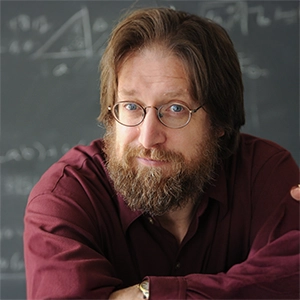
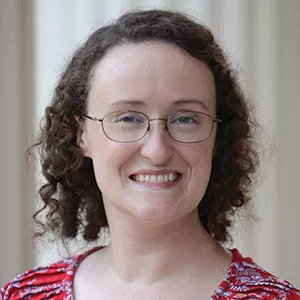
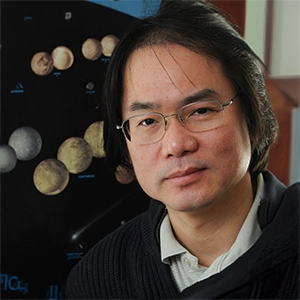
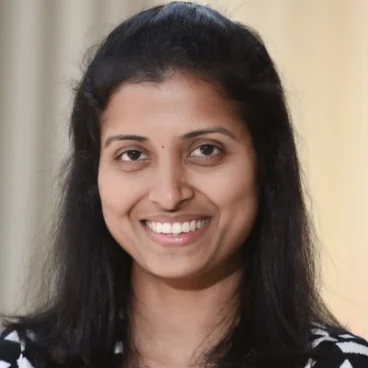
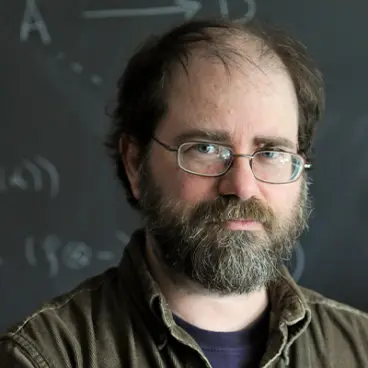
Meet the Faculty


TAKE A VIRTUAL TOUR
Launch Fisher Hall – Academics & Student SupportYOU MAY ALSO BE INTERESTED IN
See the full list of related programs on the School of Natural & Social Sciences page.

Have Questions?
Contact Us
Start your journey.